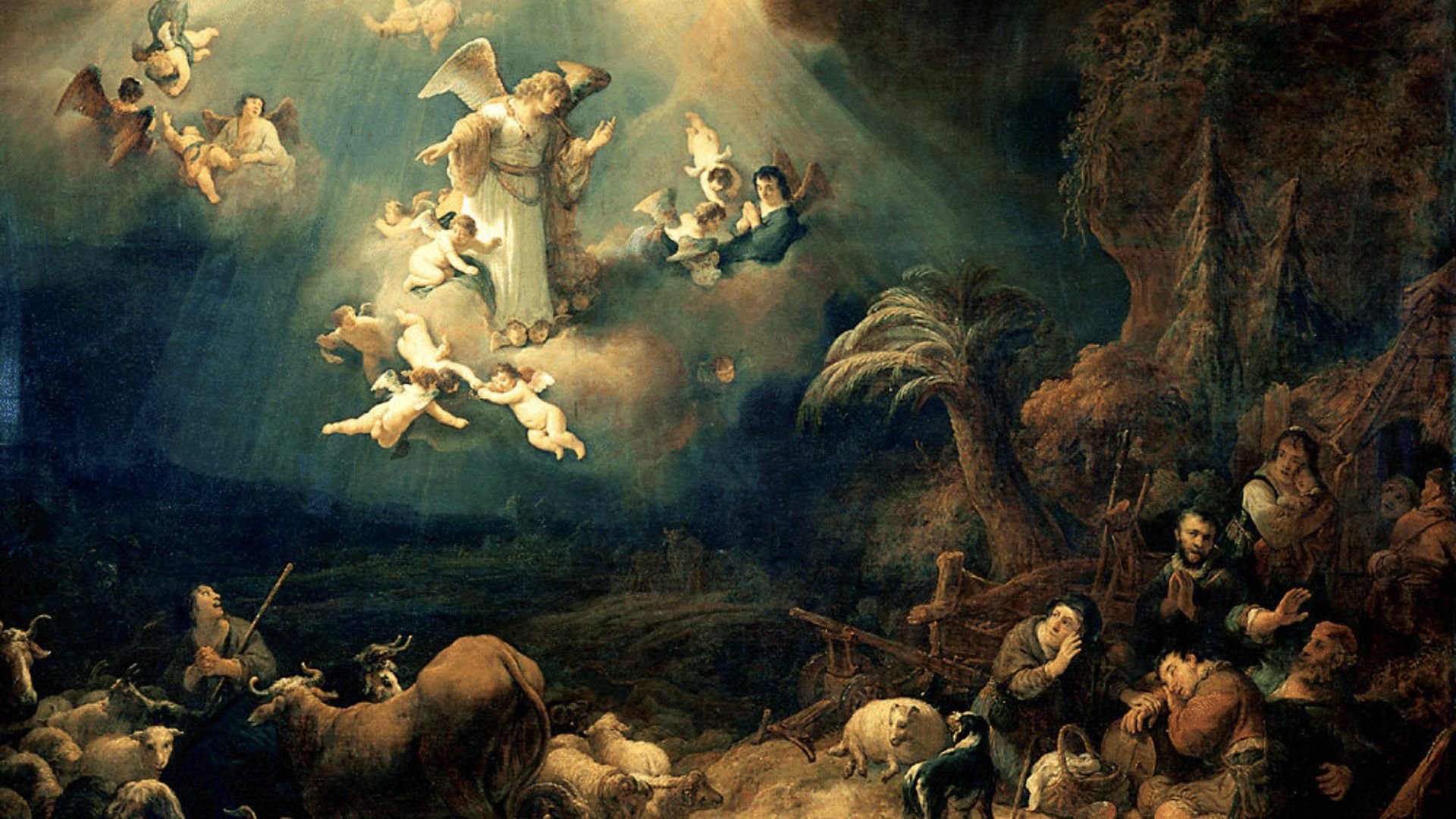
This image is by Govert Flinck – PD by age., Public Domain, https://commons.wikimedia.org/w/index.php?curid=480149
Throughout most of my life and career, I’ve been thoroughly convinced of the importance of logic in making decisions and in understanding the world around us. Humans rely on logical propositions. We are pattern-based thinkers. And, to be sure, there is great value in pattern-based thinking. By understanding patterns, we impose order on a world that otherwise might seem hopelessly chaotic. Patterns give us an anchor, a way to find ourselves in the cosmos, a way to create a solid identity.
But as valuable as such thinking is, it has its limits. Sometimes, pattern-based thinking can lead us into denying new possibilities. If something doesn’t fit into the patterns we have constructed for ourselves, it must therefore be either wrong or impossible. Things that have never been don’t fit into our understanding and therefore can never be. But it is worth remembering that the starting point for many of the innovations in science and technology has been at least a temporary suspension of pattern-based thinking in favor of imagination. “Yes, this is what reality is now, but what if…?”
We sometimes find ourselves so hopelessly tied to what is that we cannot imagine something that breaks the rules and opens us up to new ways of seeing. Sometimes we need to break the patterns. Philosophers of science call these moments “paradigm shifts,” moments when the usual and accepted way of doing or thinking changes completely.
In recent years, I have often found myself yearning for just such a paradigm shift in how we understand ourselves and how we organize our communities. In a time of widespread discontent about the way things are, sometimes a robust imagination is the road to a new way of being.
So what does all this have to do with Christmas and why am I pondering these things on Christmas Eve? Well, I’m convinced that everyone involved in that first Christmas, parents, shepherds, wise men, kings, and priests, were witnessing a new paradigm beginning, whether they knew it or not. The Christmas story stands outside of logic, not denying logic’s power but asking us to consider other ways of understanding the world as well. Much of what God unleashed into the world at the moment of the incarnation broke old patterns and demanded new ways of thinking.
“Blessed are the meek for they shall inherit the earth.”
“Love your enemies and pray for those who persecute you.”
Who thinks that way?
My fervent wish for all of us this Christmas is a freedom to think in new ways. Christ rips into creation and fundamentally reshapes it.
- How do we live into that legacy?
- Who among us carries the idea that may open up a new way of being?
It is central to our belief that Christmas changes things. May we open ourselves up to be agents of that change.