“Self-care is never a selfish act – it is simply good stewardship of the only gift I have, the gift I was put on earth to offer others. Anytime we can listen to true self and give the care it requires, we do it not only for ourselves, but for the many others whose lives we touch.” ~Parker Palmer, “Let Your Life Speak” p30
When did you start preparing for Advent and Christmas? Helpful Advent resources and devotionals started pouring into our inboxes in July – “Start Now! Advent begins November 30th!” We responded, yay, I love Advent, or, oh no, I’m behind already! As the season invites us into contemplation and wonder, lighting candles, singing, praying, worshipping together, we also know it means more to do! Services, pageants, dinners, studies; preparations for “the big day!” Coupling church work with our own personal challenges, many clergy find themselves extra exhausted by Christmas morning.
True confession – I have bought and begun dozens of Advent devotional books over the years. I opened them in earnest and began the daily readings, highlighting, making notes in the margins… enjoying my quiet time with God who would soon come down, incarnate among us! Many of them I completed… too many open to sad pages left unread as I busily, and rightfully so, attended to parishioners and preparations. At the completion of Advent, I sometimes wondered, was I really “too busy?” How could I have experienced truly meaningful Advent moments, giving my full attention and love to the God who loves me so? And how could I meet Christmas morning with more energy and joy?
I’m not suggesting we search for an absurd, “Clergy Guide: 5 Easy Steps to a Perfect Advent and Christmas!”
I would like to suggest beginning, in Advent, a practice many of you are familiar with, Centering Prayer. In response to a Vatican II invitation to revive ancient Christian practices, Father Thomas Keating, among others, developed the very simple practice of Centering Prayer.
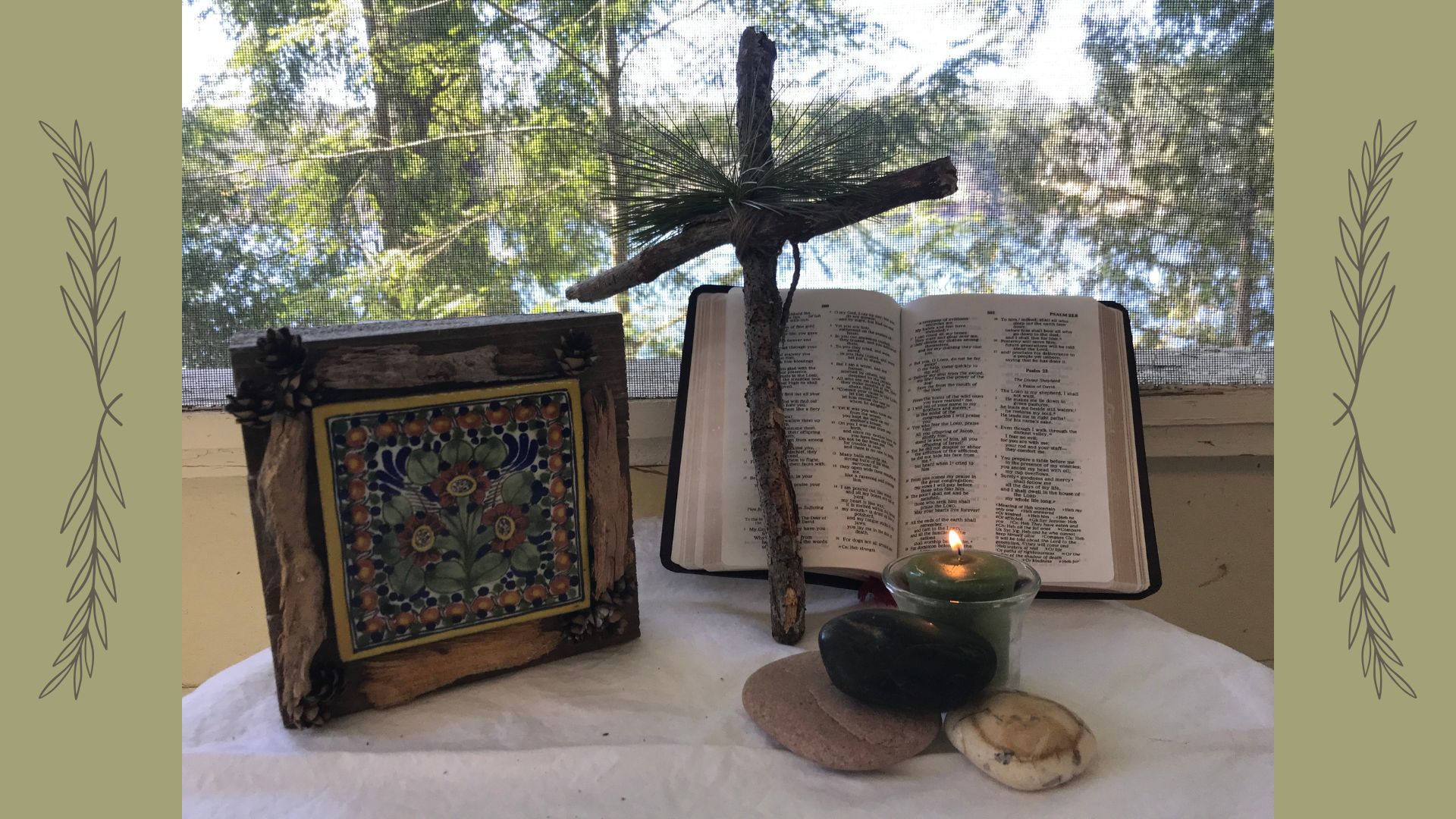
We need nothing with us except a willing spirit. No book, notepad, or pen. Sitting in silence, we open to the movement of the Spirit of God within and all around us. While many experience a sense of peace and relaxation during and after Centering Prayer, that is not its sole purpose. It is a time given to God in thanksgiving and praise. Through the regular practice of Centering Prayer we will notice its fruit in our everyday lives as we find ourselves kinder, more patient and loving, and seeing the face of Jesus in others.
Simply find a quiet space:
- Choose a sacred word (such as hope, peace, joy, love, help, or Jesus) as a symbol of your intention to consent to God’s presence and action within.
- Sitting comfortably and with eyes closed, settle briefly and silently introduce a sacred word.
- When engaged with thoughts (including external sounds and sensations) return ever so gently to the sacred word.
- At the end of the period of prayer (~20 minutes) rest in silence with eyes closed for a couple of minutes.
The silence may feel too long for some and not long enough for others but let us be patient with ourselves. If our minds wander to sermons, bulletins, or whatever else is weighing us down, that’s ok. Acknowledge those thoughts and let them go returning to your sacred word and time in silence with God.
May the gift of the practice of Centering Prayer bring you, dear pastor, to a place of deep Advent hope, peace, joy, and love!
If you are interested in joining a centering prayer group, have questions, or are in need of prayer or resources to care for yourself as you serve others, please contact me, Rev Laura Mitchell, Chaplain for Albany Presbytery at [email protected]
Resources:
- What is Centering Prayer and How Do We Do It?
- Contemplative Outreach
- Practice in community across the nation and around the world in online “prayer chapels” – Meditation Chapel
- Download the app: Centering Prayer Mobile App